The season is slowly getting underway, and it won’t be long before it’s in full swing! What are you asking about? The triathlon races, of course! We’ve put together a few tips for you on what you shouldn’t forget during your swim training phase, and much more.
Whether you’re preparing for the first triathlon competitions of your life or just getting ready for the first events of the new season, don’t be nervous. For all competitors, this is the first preparation phase after the winter break, and everyone is on a level playing field. If you’re just getting to know triathlon, we’ve got some great tips for beginners. Ultimately, the most important thing is to enjoy the competition, though of course it’s also good to have some ambitions and goals in mind when you turn up.
But let’s get down to business!
The first discipline is swimming. Swimming is the most difficult part for most participants, so if you aren’t originally a swimmer and haven’t swum hundreds of kilometres in your life.
The important thing is not to panic. Whichever swimming style you choose, it’s always best to stick to it. For example, if you’re a beginner, there’s no harm in doing a few competitions using only the breaststroke if you’re not yet very confident with the front crawl. Even so, your heart rate will be very high at the start, so it’s better to be able to swim safely than to worry about looking impressive or stylish if the intended result doesn’t match the objective.
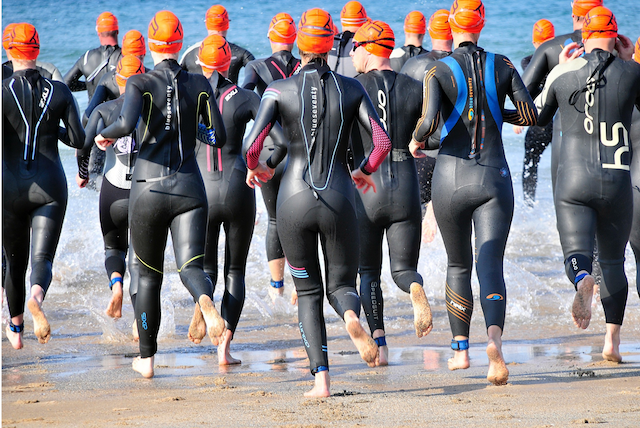
Before competitions, you should always check the organiser’s website in advance to find out which swimming style will be used. Whether the swim is in a pool or open water, and, where applicable, whether it involves laps with or without getting out of the water. It is also important to check in advance whether swimming in a wetsuit is permitted. But if you don’t have a wetsuit yet, don’t let it get you down.
With or without a wetsuit...
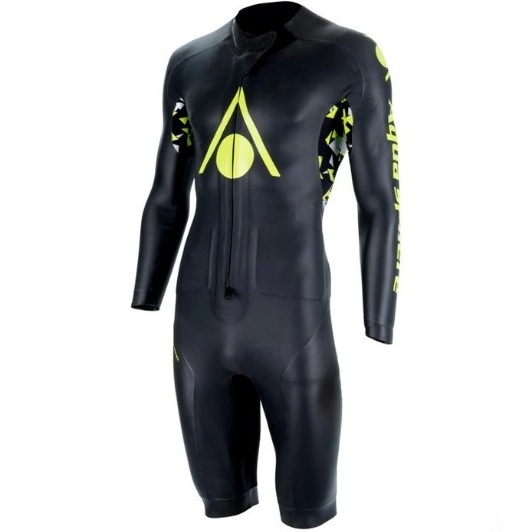
The magic of swimming in a
wetsuit only really becomes apparent when you manage to swim the entire race using the front crawl. Breaststroke ‘in a wetsuit’, as it’s often colloquially referred to among triathletes, really isn’t the most comfortable. It’s actually impossible.
The neoprene keeps you comfortably afloat and, thanks to it, you’ll be much faster in the water. If it gets unbearably hot, I’d carefully consider wearing a wetsuit, because you can get hot within the first few hundred metres – it’s not at all difficult – and after that the overall effect is rather negative.
Swimming in a pool vs. open-water swimming
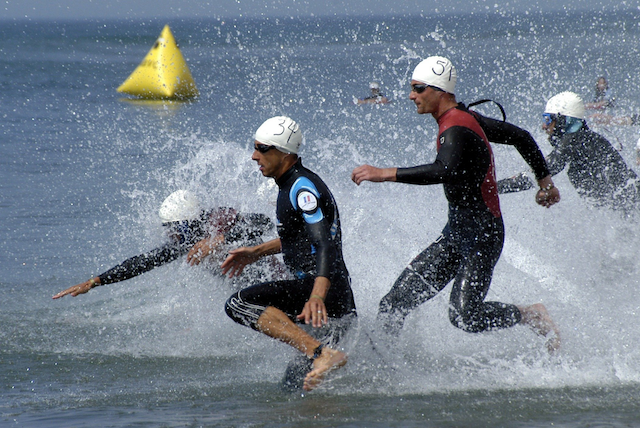
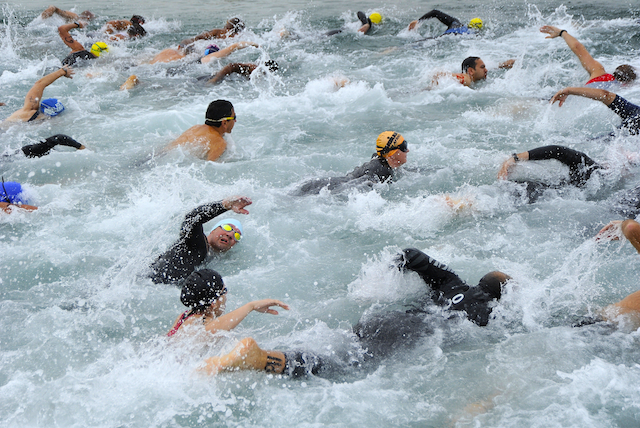
There is, however, a big difference between swimming in open water and swimming in a pool. Although it may seem at first glance that swimming is always the same, in reality this is not the case at all. Even if two people are doing the same thing, it is not the same. You have to practise open-water swimming first. You need to get used to the fact that you cannot see below your body and that you do not have a marked swimming lane in front of you. Swimming in a straight line seems like an automatic action when we swim in a pool, but I think that after a few hundred metres of swimming in open water, you will agree with me that it is not quite so automatic after all.
A few final tips
- If possible, arrange for a family member, friend or coach to come along to the competition. Getting to the competition is one thing, but getting home safely is another
- When swimming in open water, arrange for someone to accompany you; ideally, they should swim with you. They don’t have to swim with you, but it’s good to have someone watching over you from the shore, as you never know what might happen in the water.
- Make sure you’re clearly visible; I recommend
a swim buoy, which can also serve as a bag for your personal belongings
- Practise the transition too, the so-called fourth discipline of the triathlon – it might seem that getting off the bike and putting on your running shoes is no big deal, but if your legs are shaking and tears are streaming down your face, then it’s not quite so simple
- Don’t eat or drink anything unfamiliar before the race; it’s certainly not a good idea to eat a burger on Friday evening if you know the race starts at 11 am on Saturday, but at the same time, it’s not good to be hungry either. During the competition, you’ll expend a huge amount of energy, and your body needs to be able to replenish that energy from somewhere
- above all, enjoy the whole competition and finish it in good health